If you don’t watch sports you shouldn’t pay for cable television. An interesting corollary is that even if you’re not watching shows like ‘Mad Men’ or ‘Breaking Bad’ (it stands to reason many of you are not), you are subsidizing those shows and networks and raising the overall quality of television.

Networks have effectively entered into a quality war. Basic-cable channels have to broadcast shows that are so good that audiences will go nuts when denied them. Pay-TV channels, which kick-started this economic model, are compelled to make shows that are even better. And somehow, they all seem to be making insane amounts of money. This year, NBC Universal’s cable operations are expected to bring in around $5 billion, half of which is profit. Viacom’s revenue will be more than $8 billion, with 49 percent profit. Apple had one of its best years ever in 2012, but its profit margin is expected to be only 37 percent, which is still well above its 23 percent average over the past five years. An auto company would be thrilled with something in the high single digits.

At first, the cable industry’s ascendance into arguably America’s single-most-profitable big business makes almost no economic sense. Not long ago, three major networks controlled all of our viewing. Now dozens of channels reach a fraction of that audience. According to the basic rule of supply and demand, the revenue and profits should plummet. But those rules break down when an industry operates as a near monopoly.
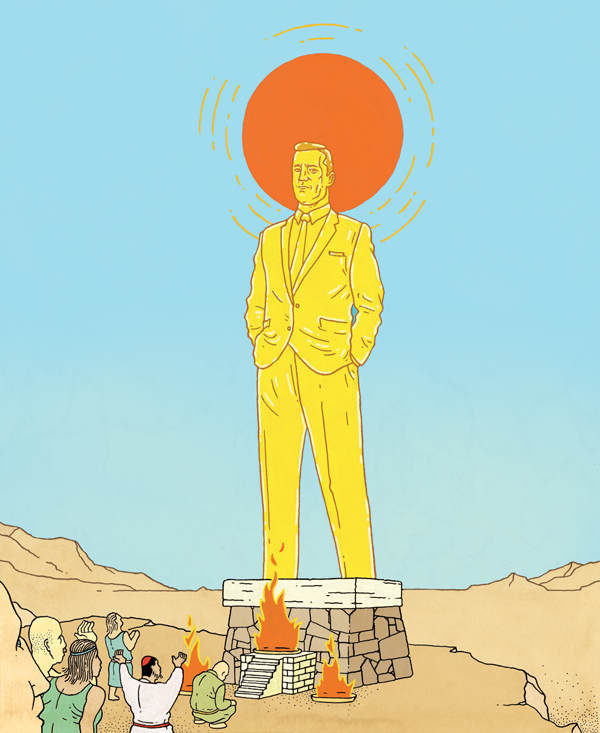
It’s interesting to me that consumers are getting better quality while cable providers and channels are burning cash like it’s no big deal. Perhaps, then, I need to reevaluate my stance on cutting the cord. The reason? If the cable provider’s OPEC-like cartel collapses or is significantly disrupted by say, AppleTV, they will no longer have the huge profits or motivation to create high-quality programming.

In an interview with NBC’s Brian Williams, Apple CEO Tim Cook said the prestigious technology company will start making some of its computers entirely in the US in 2013.

Apple CEO Tim Cook announced one of the existing Mac lines will be manufactured exclusively in the United States next year. Mac fans will have to wait to see which Mac line it will be because Apple, widely known for its secrecy, left it vague. Cook’s announcement may or may not confirm recent rumors in the blogosphere sparked by iMacs inscribed in the back with “Assembled in USA.”

Now, assembled in American has a different meaning than made in America. However, in a long interview with BusinessWeek, Cook talked about that difference (among lots of other interesting topics):

It’s not known well that the engine for the iPhone and iPad is made in the U.S., and many of these are also exported-the engine, the processor. The glass is made in Kentucky. And next year we are going to bring some production to the U.S. on the Mac. We’ve been working on this for a long time, and we were getting closer to it. It will happen in 2013. We’re really proud of it. We could have quickly maybe done just assembly, but it’s broader because we wanted to do something more substantial. So we’ll literally invest over $100 million. This doesn’t mean that Apple will do it ourselves, but we’ll be working with people, and we’ll be investing our money.

If Apple is successful about manufacturing computers in the USA and perhaps widens that scope to include other products like the iPhone, iPad, or iPods, it could have a huge snowball effect. If Apple can manufacture in the US and still turn a profit, what’s preventing other companies from doing the same?

Back on Nov 25. in a post about Shinola Heritage Brand, I wrote:

The Shinola story is great in and of itself, but it’s also an interesting slice of a larger story about the reinvention and comeback of American manufacturing and the slow fade of disposable goods. It’s something I’ve been kind of tracking here and there and wish I had a tag for those posts that I could pull together into that larger story. *Sigh*

Then came this Apple news, which followed on the heels of American Giant hoodies. Part of the reason I thought there was a bigger picture forming was due to Kickstarter and Etsy emerging as bonafide boutique manufacturing systems.

All of this is to say that Jason Kottke also honed in on this big picture about the return of American manufacturing and put together a really great post on the subject, attributing much of the resurgence to the abundance of cheap energy in America.

So basically, energy in the US is cheap right now and will likely remain cheap for years to come because hydraulic fracturing (aka fracking aka that thing that people say makes their water taste bad, among other issues) has unlocked vast and previously unavailable reserves of oil and natural gas that will take years to fully exploit. A recent report by the International Energy Agency suggests that the US is on track to become the world’s biggest oil producer by 2020 (passing both Saudi Arabia and Russia) and could be “all but self-sufficient” in energy by 2030.

Lots of great links and articles to chew over.

Damn, Jimmy Fallon is absolutely killing it with his Xmas sketches this year, which has also seen him duet with Mariah Carey on “All I Want for Christmas is You”.

I 100% agree with Alex, that NBC needs to make a Jimmy Fallon Christmas special to air before ‘It’s a Wonderful Life.’ [via popculturebrain]

Here’s the “official teaser” trailer for J.J. Abrams’ Trek reboot, Star Trek into Darkness. It’s full of action and excitement, but not much else in the way of story. As a first taste, this is probably the best way to do it because it certainly creates a lot of Oohs and Ahhs.

Directed by JJ Abrams, written by Roberto Orci, Damon Lindelof and Alex Kurtzman, starring Chris Pine, Zachary Quinto, Zoe Saldana, Benedict Cumberbatch, Simon Pegg, John Cho, Karl Urban, Bruce Greenwood and Anton Yelchin.

May 17, 2013.

Well, Okay Then

by James Furbush on December 6, 2012 · 0 comments

For those keeping track at home: “The [Seattle] police department believes that, under state law, you may responsibly get baked, order some pizzas and enjoy a ‘Lord of the Rings’ marathon in the privacy of your own home, if you want to.”

Watch, just watch. It’s like a car crash from 30,000 ft. I have no idea why this exists, but I’m sort of glad it does. Eliot Glazer puts it best:

What’s cool about this video is that John Travolta continues to exploit his children to remind us that he definitely doesn’t rub his butthole against strangers’ hands even when they ask him to stop.

Also his chin hair looks like a vagina and he is a grown man who wears a wallet chain?

And, also, the shitty dye job on his weave?

Also, he believes in aliens?

There’s so much that’s wrong about this that makes it right. Enjoy.

Played with classroom musical instruments and kids. This video has been everywhere the last few days, so you might have already watched it. But it’s sooo good. There’s something earnest about Fallon that is hard to resist.

I had a hoodie person. I have been since third grade. It’s pretty much the height of sartorial genius. So, Bayard Winthrop, founder of San Francisco-based American Giant apparel company, you have my attention when Farhad Manjoo says your hoodies are the greatest hoodies ever made.

Why are they the greatest? The sweatshirts are made in America, for starters. Winthrop hired a former Apple industrial designer to rethink every aspect of the hoodie’s design “from the way the fabric is woven to the color of the drawstrings around your neck.” Plus, by making the decision to sell directly to consumers over the Internet, American Giant can cutout the middleman costs and sell its hoodie for $80. That may sound like a lot, but, Winthrop says his hoodie is made to last a lifetime.

“I grew up with a sweatshirt that my father had given me from the U.S. Navy back in the ’50s, and it’s still in my closet,” he told Manjoo. “It was this fantastic, classic American-made garment—it looks better today than it did 35, 40 years ago, because like an old pair of denim, it has taken on a very personal quality over the years.”

I might have to buy myself an early Christmas present, unless Winthrop and Co. feel like sending me a hoodie to review. Because I’d be open to that.

RIP: Dave Brubeck

by James Furbush on December 5, 2012 · 0 comments

Dave Brubeck, one of history’s finest jazz musicians, died Wednesday morning at Norwalk Hospital, in Norwalk, Conn., said his longtime manager-producer-conductor Russell Gloyd. He was 91.

As a pianist, he applied the classical influences of his teacher, the French master Darius Milhaud, to jazz, playing with an elegance of tone and phrase that supposedly were the antithesis of the American sound.

As a humanist, he was at the forefront of integration, playing black jazz clubs throughout the deep South in the ’50s, a point of pride for him.

“For as long as I’ve been playing jazz, people have been trying to pigeonhole me,” he once told the Tribune.

“Frankly, labels bore me.”

I had the delightful pleasure of seeing Brubeck and his quartet in concert about a decade ago. He looked physically fragile at the time, decked out in a thick neck brace, but man could he tickle those ivories like nobody else. What I remember most clearly was his delight of being able to play for an audience, never once shedding an ear-to-ear grin.

He totally blew me away in every sense of the word with his showmanship, his musicality, his ability to fill the space in between notes, and for letting the other musicians have the spotlight. Brubeck’s greatness was in not having to prove his greatness at the sake of his band mates. But boy did he let it fly when it was his turn to.

He’ll perhaps always be remembered for “Take Five” and “Blue Rondo a la Turk” but I always had an affinity for “Take the A Train”.

It’s the dirty little secret of cable companies. The sad thing is, for the most part, there are ways to get around it depending on how many sporting events you actually care to watch. The big ones, including the NFL, are typically broadcast for free on the networks.